Turtles — Beautiful but Fragile Diversity
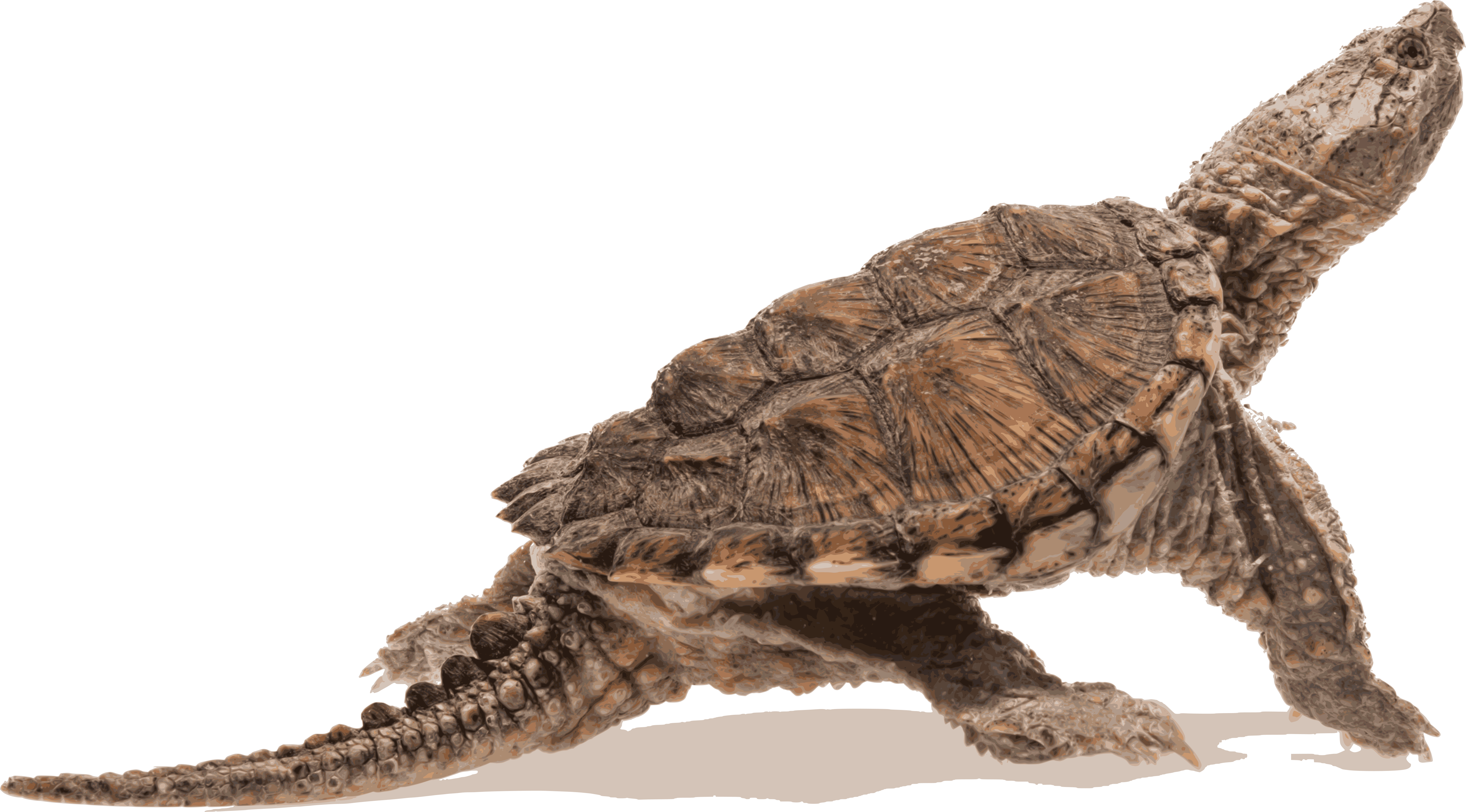
How much do you know about turtles? All 353 extant turtle species are presented in Figure 1. Through this visual, you can learn which species belong to each group and see their diverse ecological characteristics. By moving your cursor over each silhouette, you can also view photographs of turtles belonging to that group.
Even though they are all turtles, some species live mainly on land, while others spend most of their lives in the water and rarely come ashore. Their diets also differ widely. Some species even hide their necks in a way that is different from what we typically imagine—by bending their necks sideways to tuck them in. Their sizes vary greatly as well: some species are only about 10 cm long, while others exceed 2 meters.
And most importantly, this beautiful diversity is now under threat. Species marked in red as “Endangered” are those classified as Vulnerable, Endangered, or Critically Endangered by the International Union for Conservation of Nature (IUCN). About half of all existing turtle species are at risk of extinction.
How has such a troubling situation arisen?
Stanford et al. (2020) identify several factors that contribute to the decline of turtle populations, including habitat loss and degradation, consumption of their meat and eggs, collection for the pet trade and medicinal use, invasive species, and climate change. Many of these drivers are rooted in human activities.
Figure 2A illustrates the number of animals seized in illegal wildlife trade. Remarkably, approximately 64% of all seized individuals are turtles. Moreover, most of the turtles confiscated are species that are already threatened with extinction. Behind this illegal trade lies unsustainable poaching that disregards species conservation. The desire to own rare turtles—often stemming from genuine love—ironically drives them toward extinction. In other words, a tragic paradox arises in which people who love turtles are contributing to their extinction.
Figure 2B visualizes the impact of plastic debris on sea turtles. According to Moon et al. (2023), about 54% of the roughly 8,900 examined sea turtles had ingested plastic. Wilcox et al. (2018) further report that when 14 pieces of plastic are found in a turtle’s gastrointestinal tract, the likelihood of plastic-related mortality reaches 50%.
Taken together, these figures reveal that human actions are a significant driver of the destruction of turtle species.
Turtles are known for their long lifespans, but they also require many years to reach sexual maturity. Figure 3 visualizes the number of years to maturity for several animals. Compared with bears, deer, and rabbits, snapping turtles and sea turtles take an exceptionally long time to mature. This means that turtles must wait many years before they have even a single opportunity to reproduce, making population recovery very slow once their numbers have declined.
According to a report by the U.S. Fish & Wildlife Service, during the period before a snapping turtle lays its first clutch of eggs, a white-tailed deer could potentially reproduce repeatedly and reach a population of 629 individuals. The low reproductive potential of turtles is therefore a major vulnerability for species survival and may be contributing to their heightened risk of extinction.
What can we do to protect this diversity that is now being lost?
Figure 4 reflects the number of nesting sea turtles and visualizes changes over time at each beach. Hays et al. (2020) report that, thanks in part to conservation efforts at many sites, nesting numbers have been increasing or remaining stable over the long term on many beaches. However, some locations still show long-term declines, so the situation is far from secure. Even for those of us who are not wildlife specialists, there are small actions we can take in our daily lives to help protect this diversity. Why not start with steps like the following?
- Reduce your use of plastic products.
- Take part in local environmental conservation activities, such as beach clean-ups.
- Avoid consuming turtle meat or eggs.
- When buying turtles as pets, choose captive-bred individuals rather than wild-caught ones.
- Never abandon pet turtles, especially by releasing them into the wild.
Details of Figures
Fig.1: Publicly available datasets published in Wang et al. (2025) were mainly used. Minor preprocessing was conducted to improve clarity.
Fig.2A: Mainly based on the CITES Trade Database (source code “I”). In this work, records with source code “I” are treated as illegal trade seizure records. These records indirectly indicate seizure-related activity but do not provide a comprehensive record of wildlife seizures or the actual number of animals involved.
Fig.2B: Plastic-related mortality is an estimated probability based on the model of Wilcox et al. (2018).
Fig.4: Supplemental information in Hays et al. (2020) were used. Count in each year presents the number of nests or nesters (nesting female turtles) in each area. Nests and nesters are treated as the Number of Egg-Laying Sea Turtles in this work. “Count ratio” means the ratio relative to the earliest observation year (set to 1), and the y-axis is shown on a logarithmic scale. For Baja California, the count is reported as turtles/12 hr, which is an exception to the other sites.
References
Symbols following reference numbers indicate references that provided
the source data used in each figure:
† Fig.1
‡ Fig.2A
§ Fig.2B
¶ Fig.3
‖ Fig.4
- 1† ‡ Wang, J., Xu, Y., Zhu, H., Chen, C., Zhao, Y., & Wang, Y. (2025). CheloniansTraits: A comprehensive trait database of global turtles and tortoises. figshare, https://doi.org/10.6084/m9.figshare.28828241
- 2§ Moon, Y., Shim, W. J., & Hong, S. H. (2023). Characteristics of plastic debris ingested by sea turtles: A comprehensive review. Ocean Science Journal, 58, 31. https://doi.org/10.1007/s12601-023-00124-z
- 3§ Wilcox, C., Puckridge, M., Schuyler, Q. A., Townsend, K., & Hardesty, B. D. (2018). A quantitative analysis linking sea turtle mortality and plastic debris ingestion. Scientific Reports, 8, 12536. https://doi.org/10.1038/s41598-018-30038-z
- 4 Stanford, C. B., Iverson, J. B., Rhodin, A. G. J., et al. (2020). Turtles and tortoises are in trouble. Current Biology, 30(12), R721–R735. https://doi.org/10.1016/j.cub.2020.04.088
- 5‖ Hays, G. C., Mazaris, A. D., & Schofield, G. (2021). A pulse check for trends in sea turtle numbers across the globe. iScience, 27(3), 109071. https://doi.org/10.1016/j.isci.2024.109071
- 6‡ CITES Trade Database. (n.d.). CITES Trade Database. Available at: https://trade.cites.org/ (accessed 14 November 2025).
- 7§ CSIRO. (2018). How much plastic does it take to kill a turtle?. Available at: https://www.csiro.au/en/research/environmental-impacts/sustainability/turtles-and-plastic (accessed 14 November 2025).
- 8¶ U.S. Fish & Wildlife Service. (2022). Turtles Face Unique Challenges – CITES Can Help. Available at: https://www.fws.gov/story/turtles-face-unique-challenges-cites-can-help (accessed 14 November 2025).
- 9¶ SeaWorld Parks & Entertainment. (2025). All About Sea Turtles: Reproduction. Available at: https://seaworld.org/animals/all-about/sea-turtles/reproduction/ (accessed 14 November 2025).
- 10¶ Animal Diversity Web. (n.d.). Ursus arctos (brown bear). Museum of Zoology, University of Michigan. Available at: https://animaldiversity.org/accounts/Ursus_arctos/ (accessed 14 November 2025).
- 11¶ Tennessee Wildlife Resources Agency. (n.d.). White-tailed Deer (Odocoileus virginianus). Available at: https://www.tn.gov/twra/wildlife/mammals/large/deer.html (accessed 14 November 2025).
- 12¶ How to Rabbit. (n.d.). Offspring – Reproduction and Maturation in Rabbits. Available at: https://how-to-rabbit.com/offspring/ (accessed 14 November 2025).
Photo credits
- Title photo — Public domain
- Sec.4 photo — Taken by the author (Masaki Kubota)
- Fig.1(Big-headed) — Waterhouse (CC BY-SA 3.0)
- Fig.1(Eurasian pond turtles) — OpenCage (CC BY-SA 2.5, modified)
- Fig.1(Leatherback sea turtles) — Public domain
- Fig.1(Sea turtle) — Charles J. Sharp (CC BY-SA 4.0)
- Fig.1(American pond turtles) — Jf268 (CC BY-SA 3.0)
- Fig.1(River turtle) — Matěj Baťha (CC BY-SA 3.0)
- Fig.1(Mud turtle) — Peter Paplanus (CC BY 2.0, modified)
- Fig.1(Tortoises) — Childzy (CC BY-SA 3.0)
- Fig.1(Pig-nosed) — Bjoertvedt (CC BY-SA 3.0)
- Fig.1(Softshell) — Wibowo Djatmiko (CC BY-SA 3.0)
- Fig.1(Snapping) — Norbert Nagel (CC BY-SA 3.0)
- Fig.1(African side-necked) — Charles J. Sharp (CC BY-SA 4.0)
- Fig.1(American side-necked) — Haolochromis (CC BY-SA 3.0)
- Fig.1(Snake-necked) — Bloopityboop (CC BY-SA 4.0, modified)